
The Voices of Russell Market
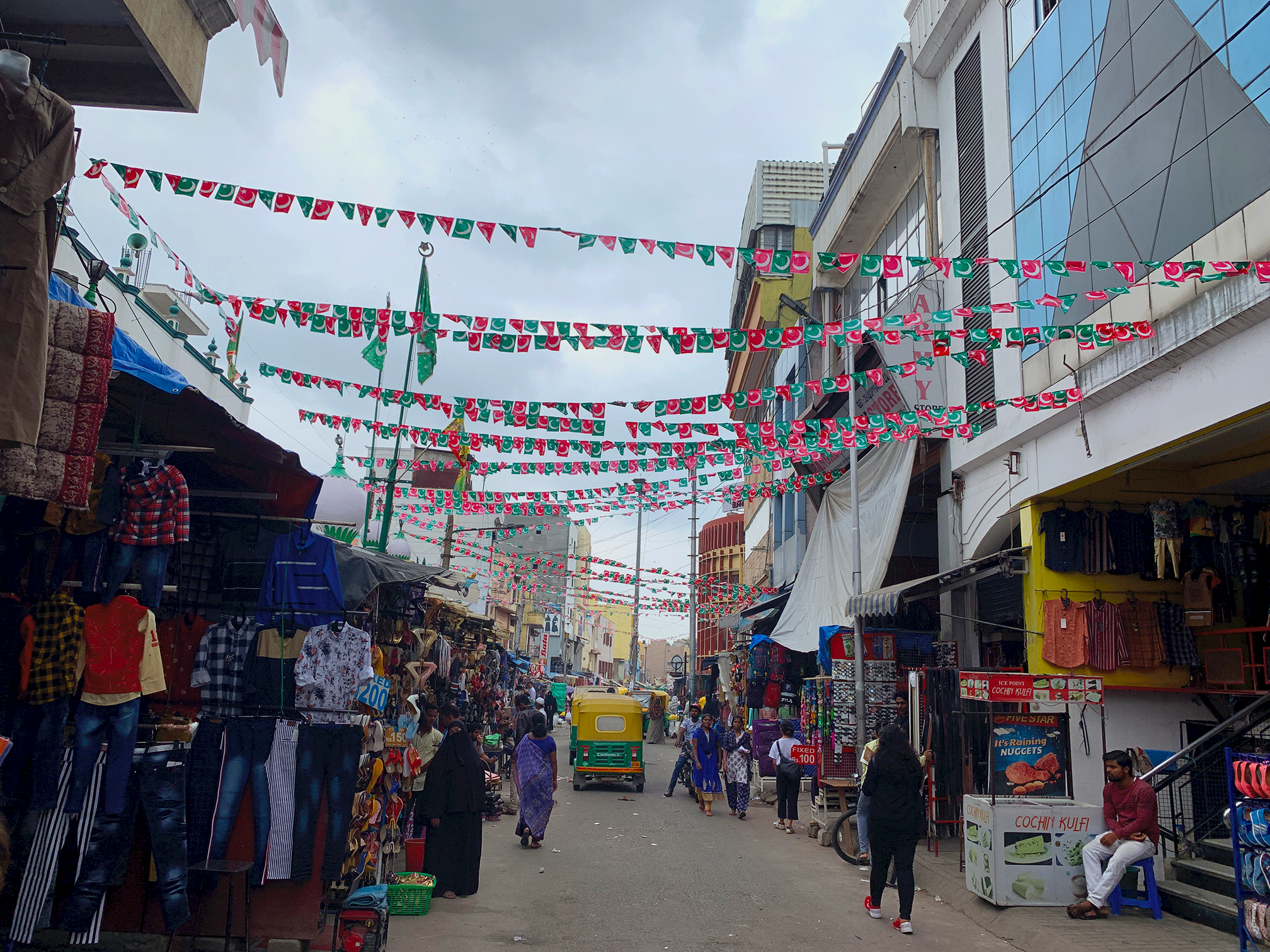
At 10am the search began. Five Australian women branched off down the streets and alleyways.
These are the stories they discovered...

THE FOOD OF THE GODS
By Sarah-Jane Adams

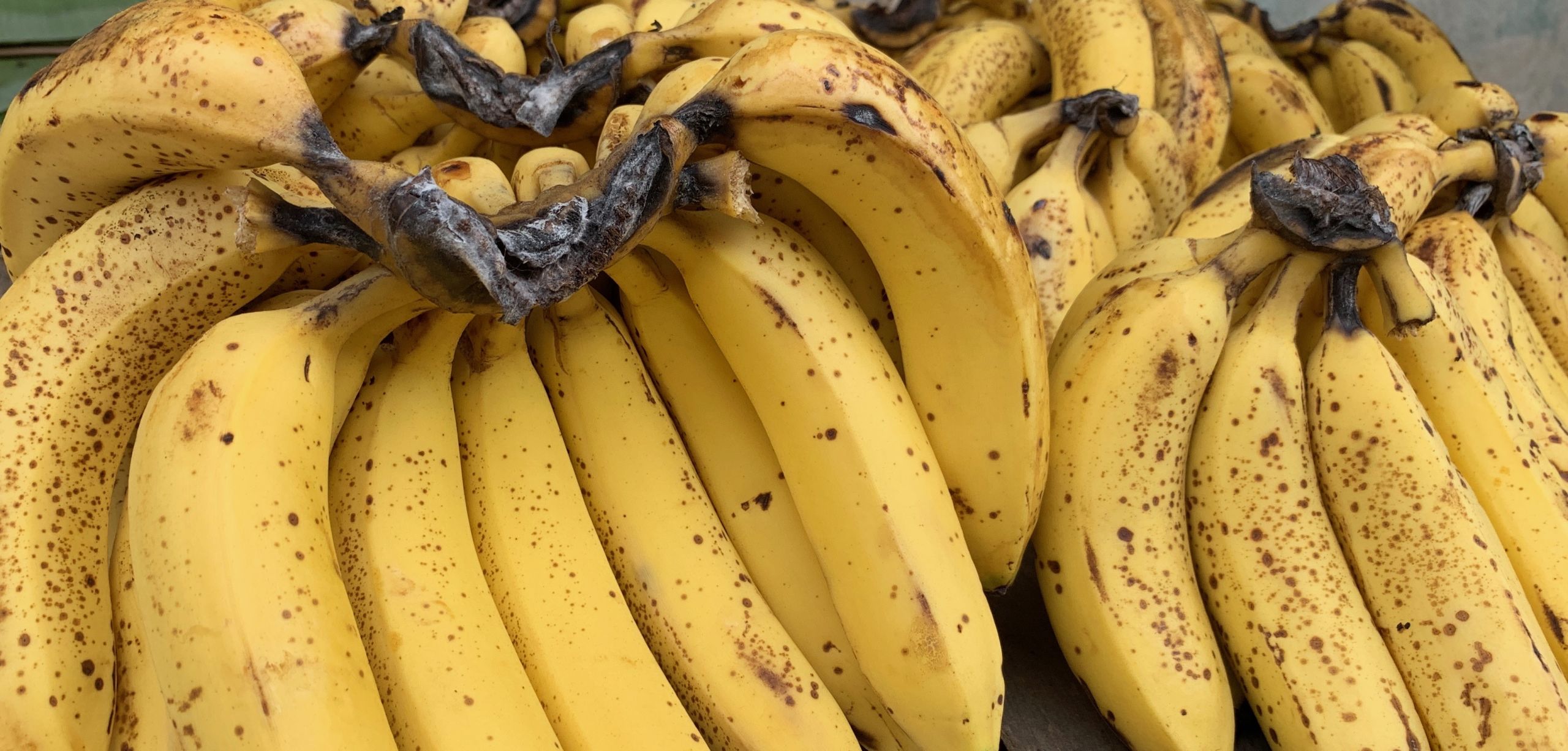
“God bless” says Mr. Appu Kumaresh, flashing a big smile as he pockets 10 rupees and hands over a big bunch of bananas to a woman entering the temple next door. “It’s good business,” he says. “Bananas are the very best thing you can offer to the Gods.”
At six o'clock every morning, Mr. Kumaresh packs up sixty cases of bananas and begins the two-hour drive from his home to Russell Market, Bangalore's oldest market. “We come to sell in the city,” he says, continuing to rip the banana leaves apart, “It’s good because the leaves are used as plates and the bananas are sold to people visiting the temple.”
In the Hindu faith, bananas are considered a sacred fruit. According to ancient lore, Rishi Durvasa's wife turned into a banana tree, and now bananas and their leaves are holy and ideal for offerings.
The banana is India's most-cultivated crop because of its availability, affordability and popularity for religious purposes.
“For me, you can have apples, and all the other fruits, but always first banana, they are closest to the Gods,” explains Mr Kumaresh.
A loyal customer of Mr Kumaresh, Pasharun Babu, loves wandering the winding streets of Russell Market every day to collect his groceries. Before returning home, he spends an hour at the local temple, giving thanks and providing fruit as his offering.
“Bananas are simple . . . they can be given by anyone anywhere and are sourced by nature," he says. "The Gods will be pleased by this, but I am even more pleased . . . I have done this since I was a boy,” he laughs.
“Every day is different, but sometimes I run out of bananas and I will have to go to City Market and get even more,” says Mr Kumaresh.
As the pile of banana leaves rises on the concrete floor, Mr Kumaresh pauses, puts down his blade and mentions that he has a young daughter. “She is only eight, so she is still studying . . . but I think when she grows up she will work with me here too. It’s proud work.”
Only once the market falls quiet and the sun goes down will Mr Kumaresh pack up his stall and start the long journey home. By the time the sun rises again, he will be on his way back to the temple, with more bananas to be purchased for the Gods.

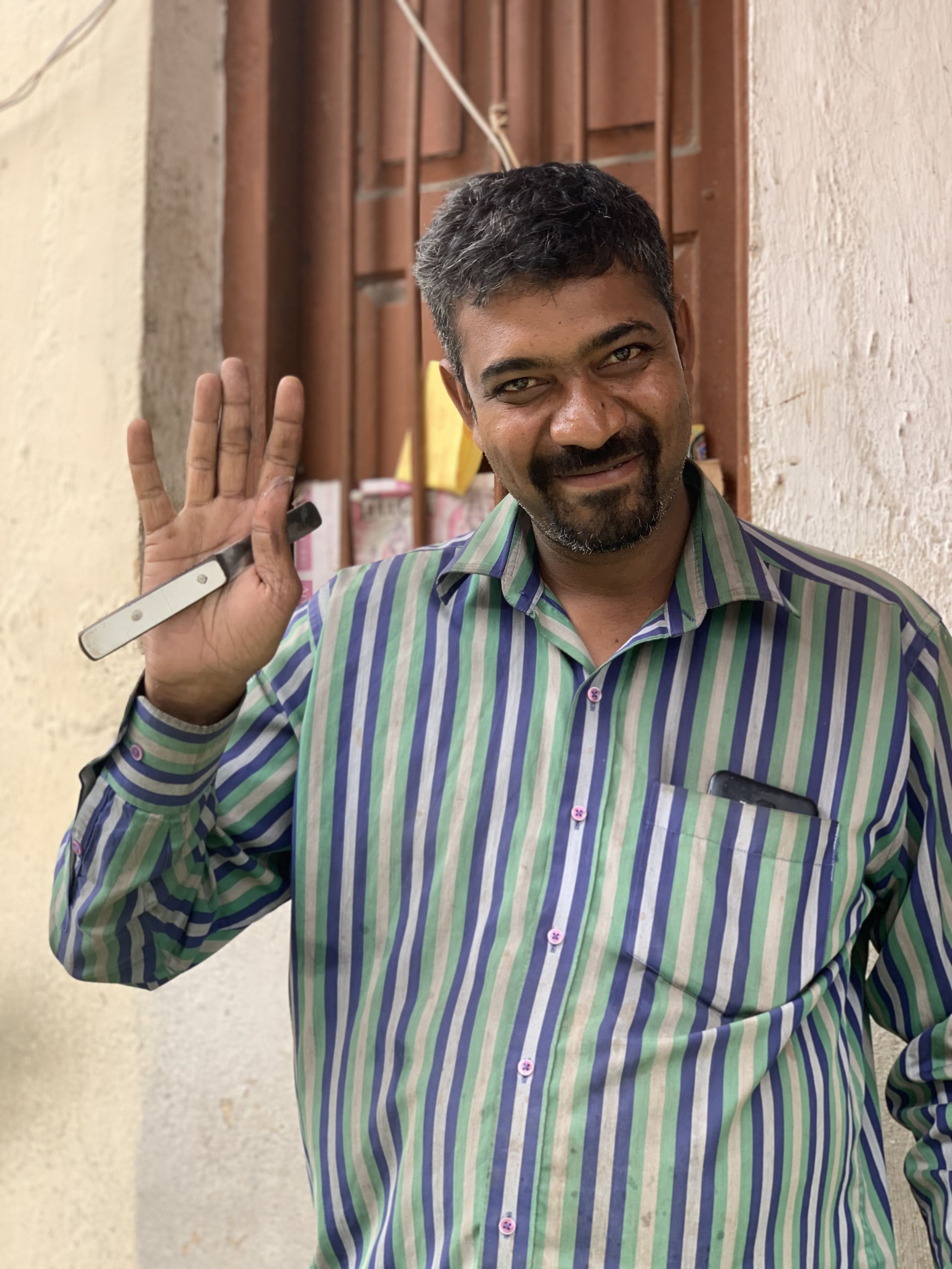

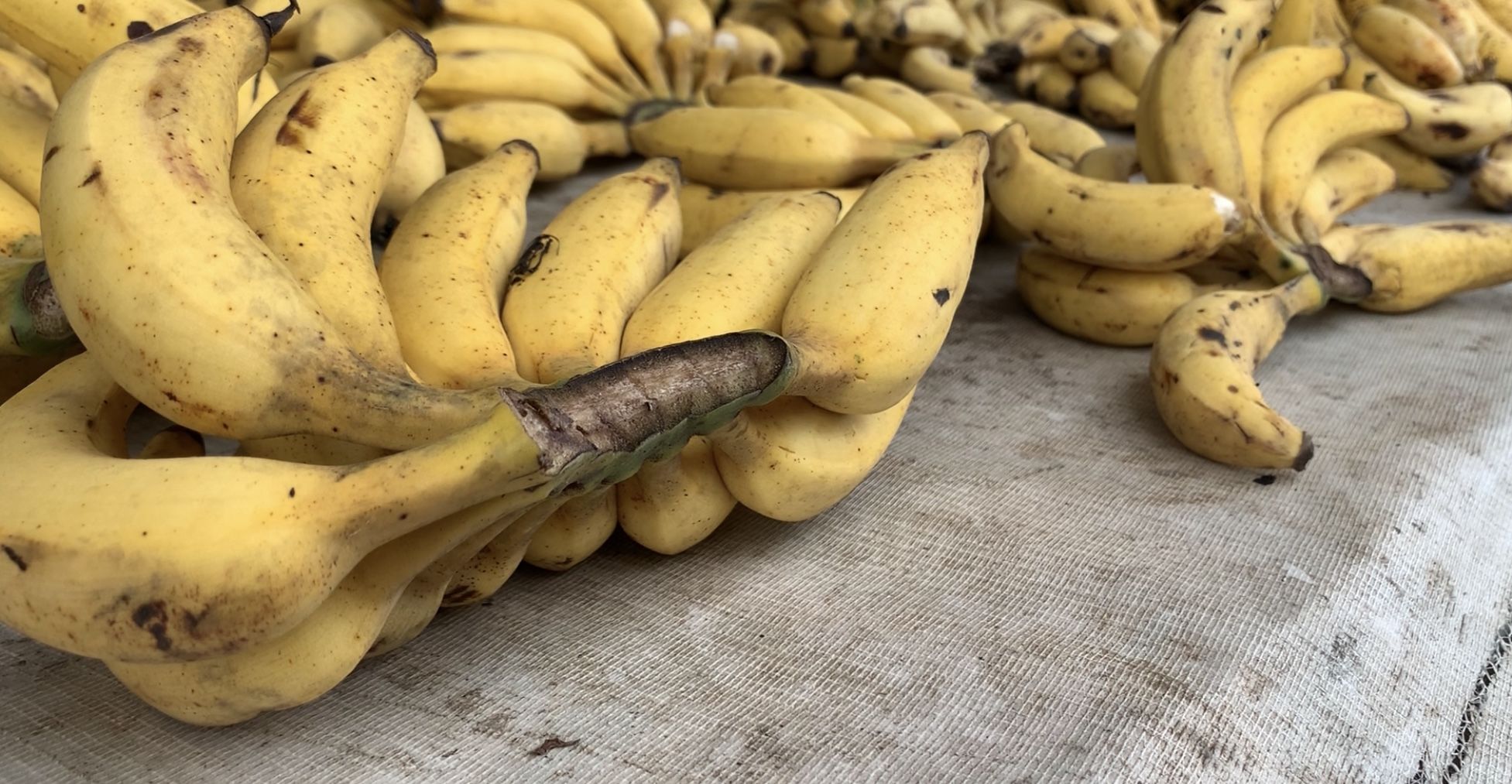

A look into everyday life of Russel Markets busiest banana stands.
A look into everyday life of Russel Markets busiest banana stands.
TAILOR MADE
By Liv Whiting

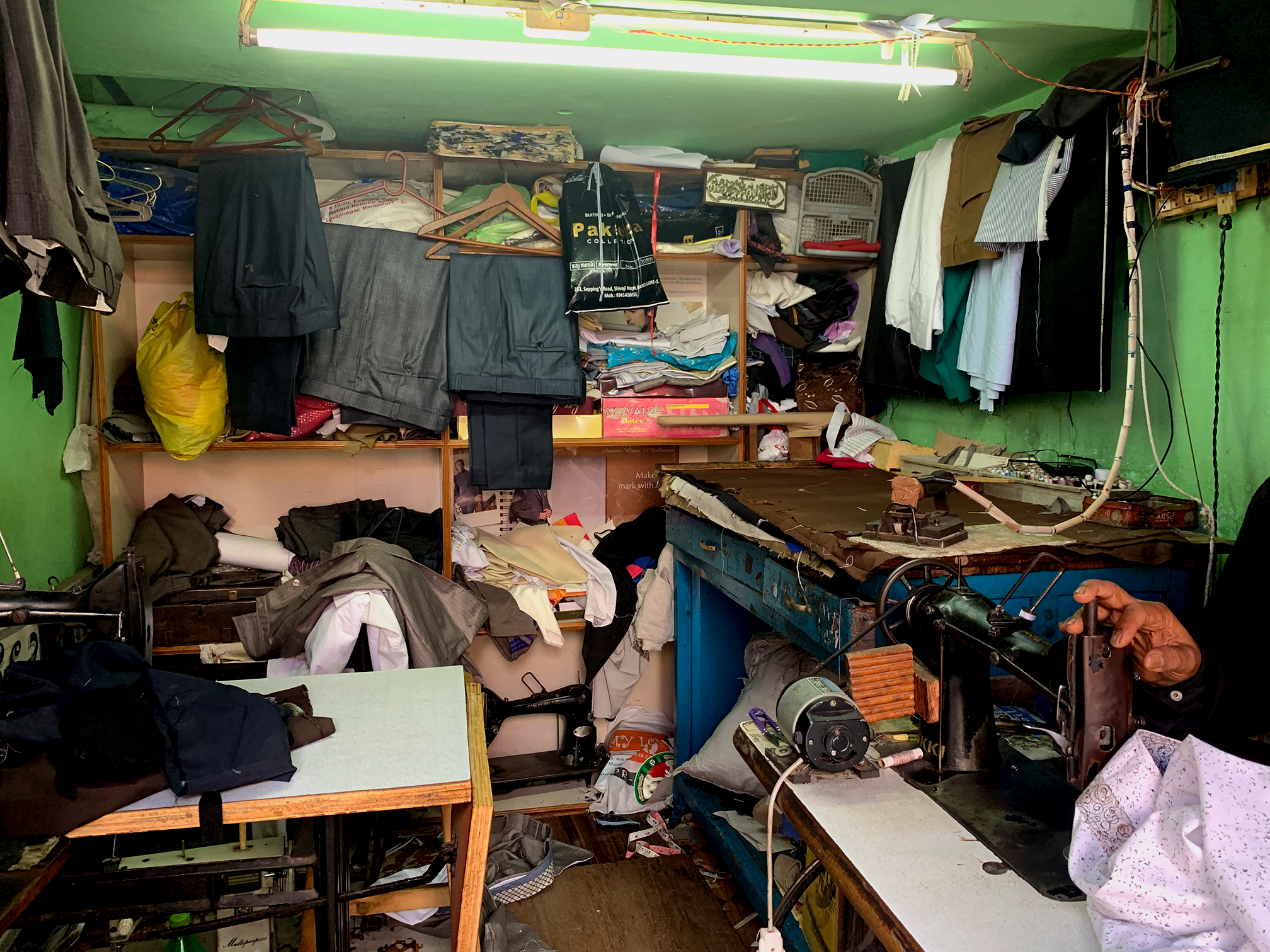
Down a narrow bustling street sits a ‘hole in the wall’ tailor shop. Mr. Azmath is finalising the stitches on his last order for the day; a white button up, still warm from the last strokes of the iron. He hangs it up, ready for collection.
The family tailor business, on the surrounding streets of Russell Market, has been in the Azmath family for three generations, passed down from his forefathers.
The hammering of the sewing machine dominates the room as Mr. Azmath shows how he finishes the seam of a collar. “After tenth standard my father wanted me to take over the business, so I came here to work for our family.”
“I started at 19 and I’ve now been here for 50 years. I started learning then, but I still learn every day because there is always something new,” he says.
As India’s online markets burgeon, local retailers, like the Azmath family, are watching their business wane.
India’s e-commerce market is expected to reach US $200 billion by 2027 from US $38.5 billion in 2018, according to the India Brand Equity Foundation.
Weddings and celebrations like Christmas are the backbone of the business these days.
Mr. Azmath laughs as I ask him whether he sewed his eldest daughter’s wedding dress. “Of course, it was some of my best work,” he smiles.
A friend of Mr. Azmath tells me he visits after prayer at the mosque next door. “I come and sit here while he works just to talk for ten minutes when I can make time.”
Mr. Azmath removes his foot from the floor pedal. He explains how business has dramatically changed over the last ten years. His clientele has dwindled to two to three orders a day.
As a father to five children, Mr Azmath works alone for ten hours a day, to provide for their education. He is the last member of his family who will work as a tailor on the corner of Russell Market.
“I don’t want my children to take over the business because the trend is being replaced by online ready-made garments,” he explains.
The Azmath children have learnt to sew but will not utilise the skill as an occupation.
“They’re being educated so they can build their future and go into other fields like IT, or whatever they’d like...
"There is no business here.”

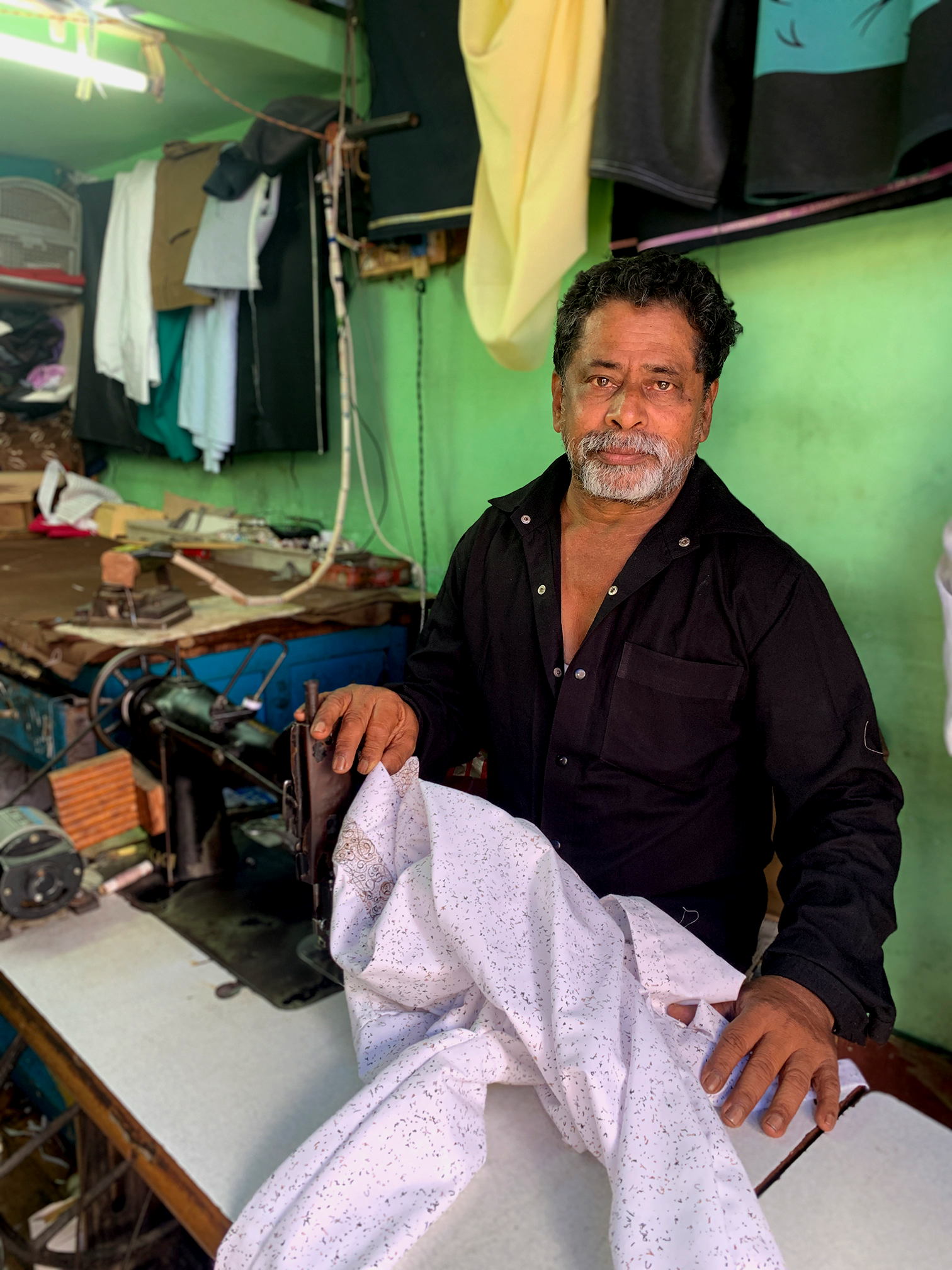

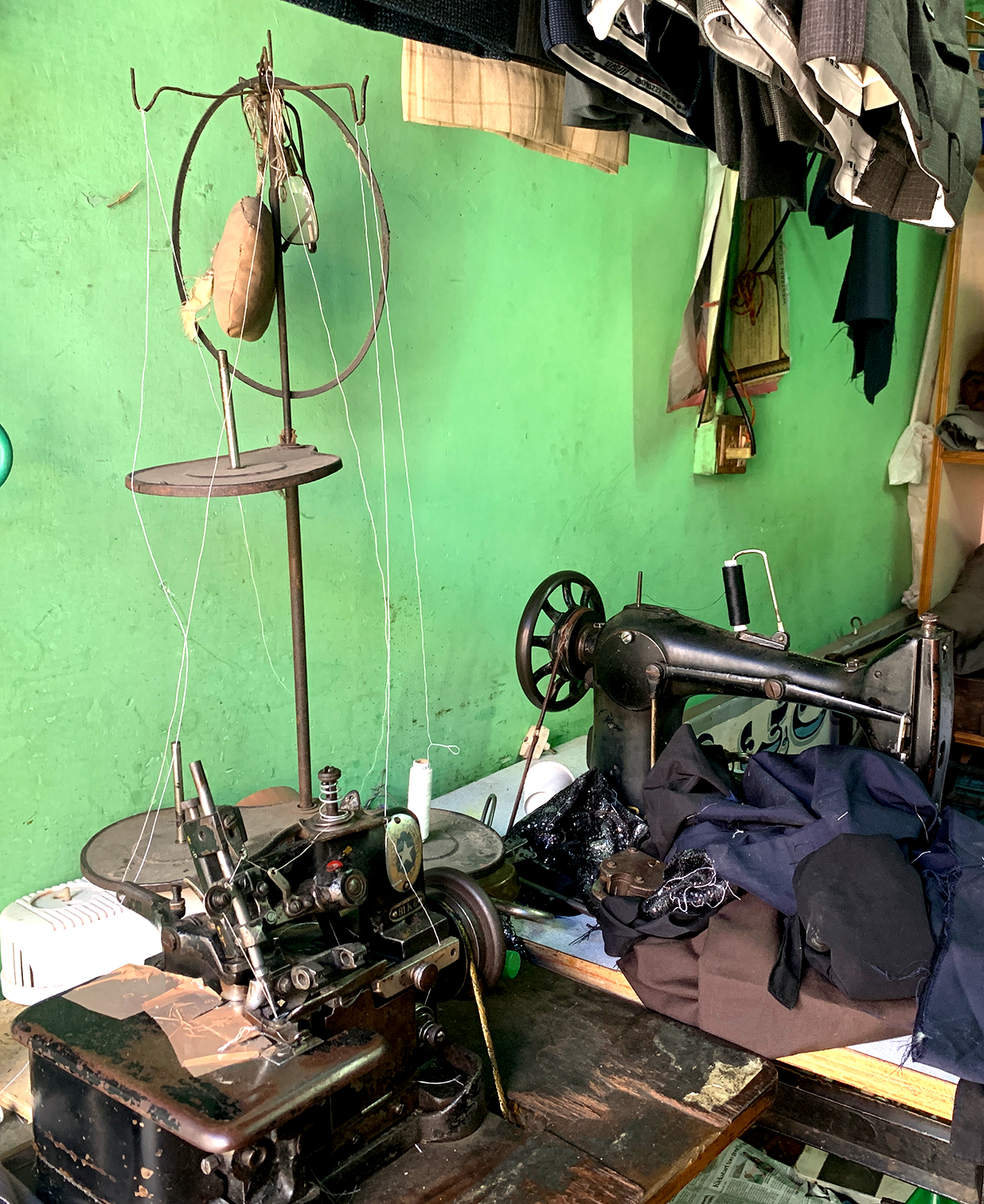

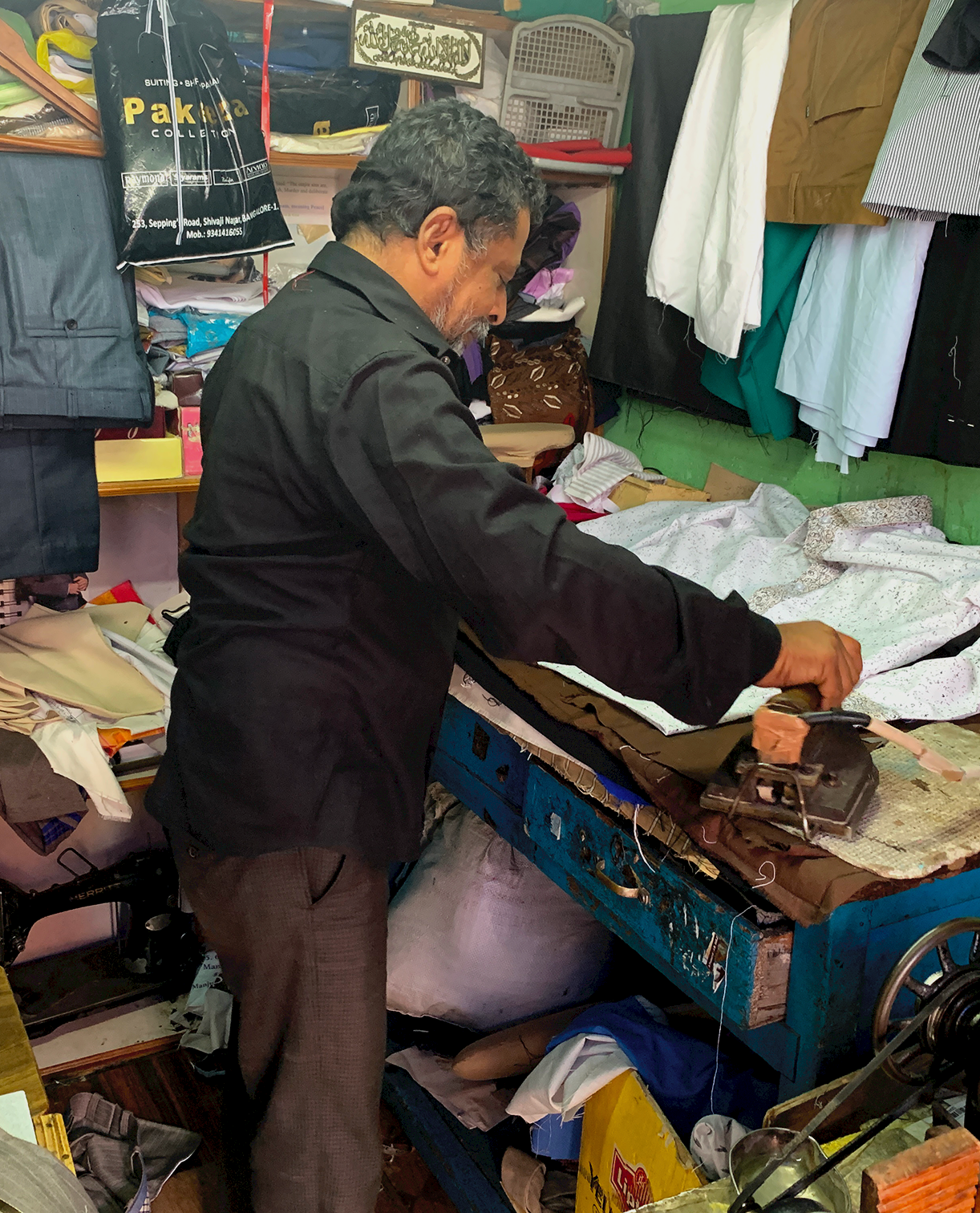
The tailor of Russel Markets.
The tailor of Russel Markets.
EVERY DOLLAR COUNTS
By Adelaide Miller

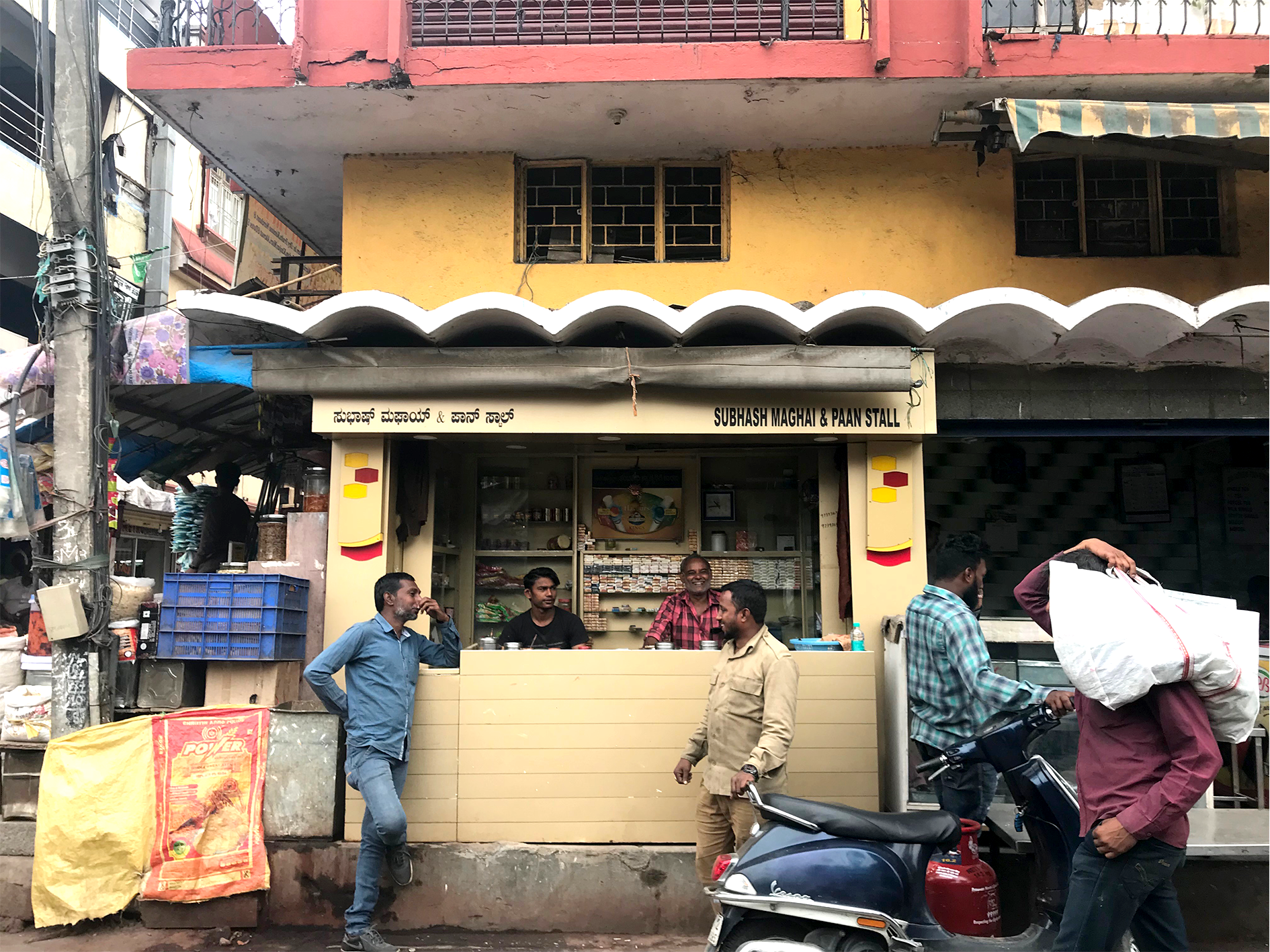
All he needed was his ingredients, his stool and his umbrella.
At twenty-years of age, Shupash Maghai packed up his life in Rajasthan and travelled south for over 2000km to Bangalore, to begin life with his wife Sushilasing Maghai.
Situating himself on the corner of Russell Markets in 1964, he spent every day making traditional beeda to sell to the locals. It was a specialty of his.
Beeda is an ancient Indian treat that consists of betel leaves from Kolkata, areca nut and many sweet powders and pastes. It is also used as a palate cleanser and a digestive aid after a meal. Mr. Magahi sells 15 flavours at his shop which include chocolate and mango.
“When I first came, all I did was put the umbrella out on the footpath, taking the heat and the rain, selling 50 beeda a day,” says Mr. Maghai.
He sat under the umbrella for 18 years, with tins of flavours by his side. The young man became a town favourite as he sold his delicious wares to those who passed by.
“All profits went to my business and three children’s education... I worked hard, and God gave me this shop,” explains Mr. Maghai.
In 2002, Mr. Maghai pulled together all his savings and opened the wooden windows to his very own shop front.
I watch him closely as he crafts a treat. His left hand cradles the leaf while his right paints the surface with an orange paste. He sprinkles the leaf with khajur, a dried fruit, like it is his canvas. He laughs with customers; a smile decorates his face.
“Each day I sell 500 pieces for 15 rupees each and I also make lots of beeda for weddings...1000 to 2000 per function,” says Mr. Maghai.
The business has allowed him to buy both of the shops next door, renting them out for 10,000 rupees per month.
Vikrm Maghai, his eldest son, works for HSBC bank. He explains that his success comes from his father’s ability to save. “We are so proud of our father, absolutely...he has worked hard for all these years and it’s because of him that we are able to be educated and work for great organisations.”
Mr. Maghai passes me a beautifully crafted beeda. The green coating has a toothpick pierced through the middle to hold all the ingredients in place. A cherry decorates the outside. “For you, please take,” says Mr. Maghai.
I will not forget this man.

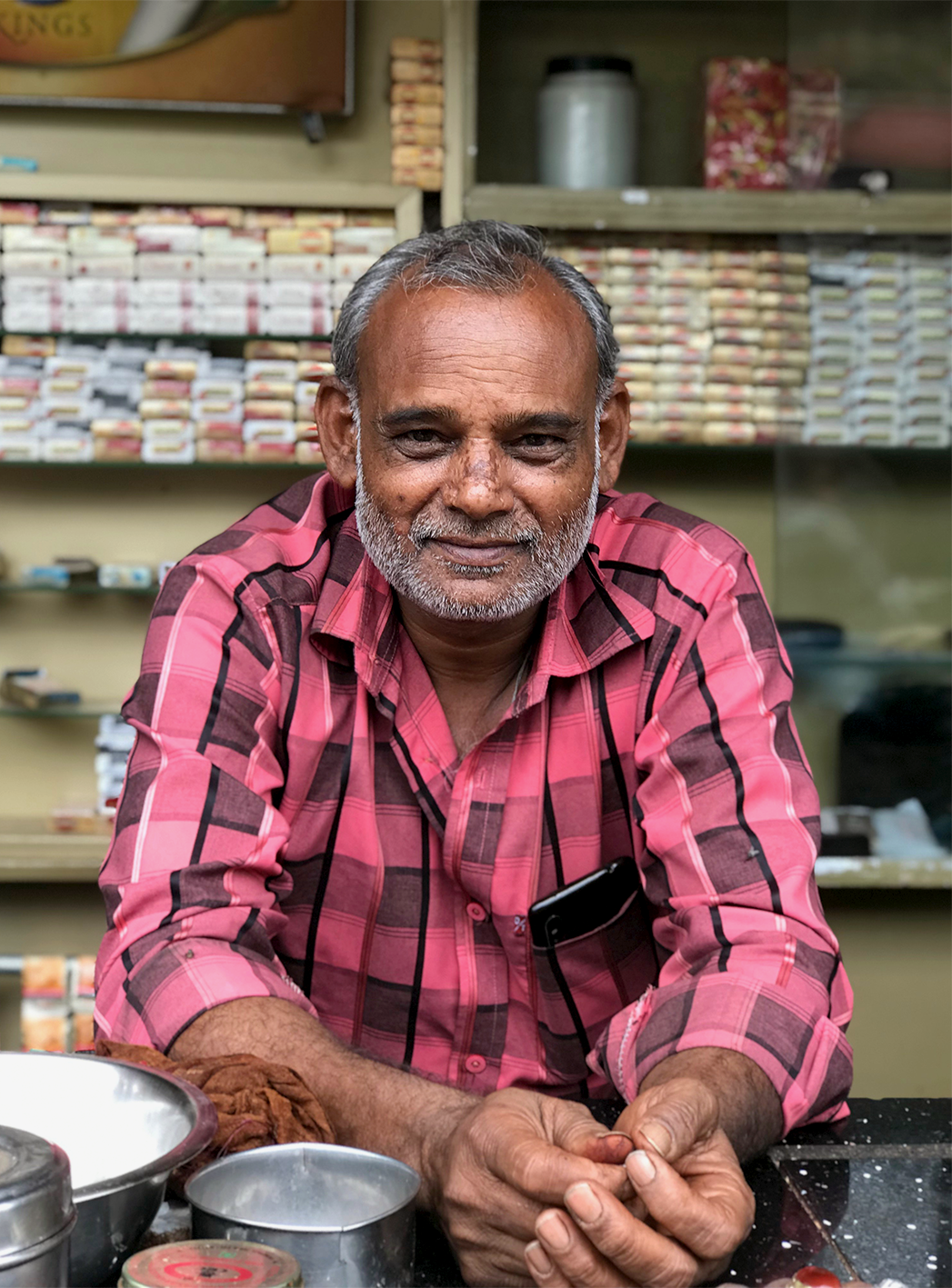

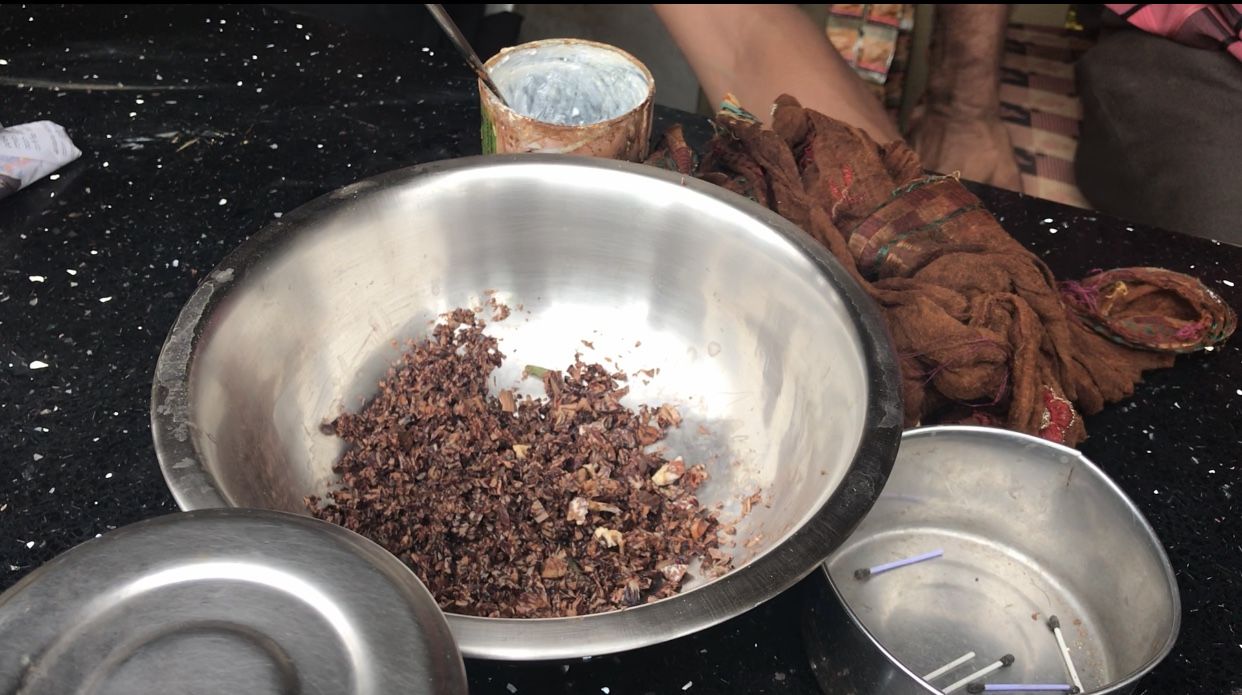

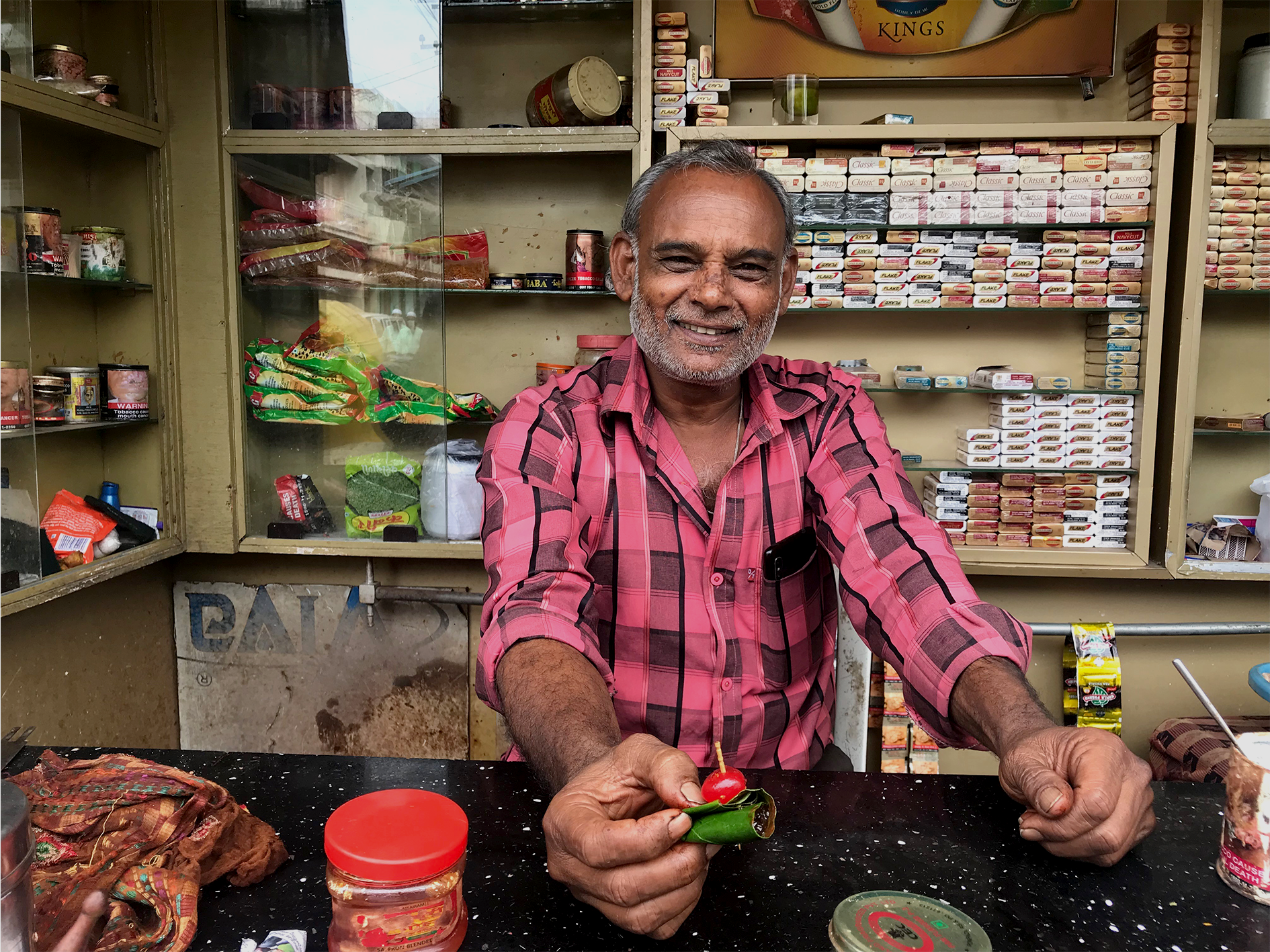
How to make Beeda Shupash Majhai
How to make Beeda Shupash Majhai
Best Thing Since Sliced Bread
By Amaani Siddekk

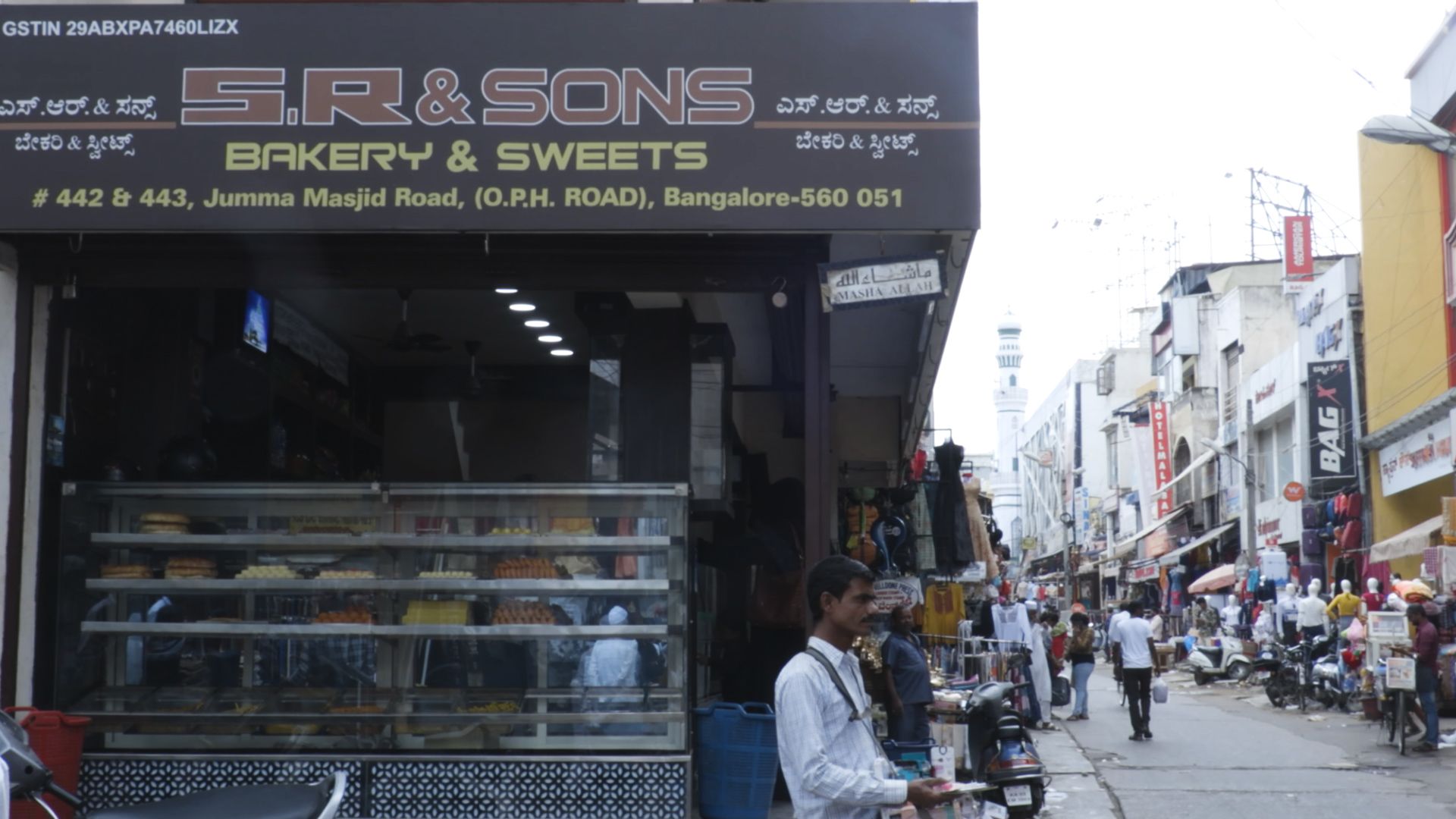
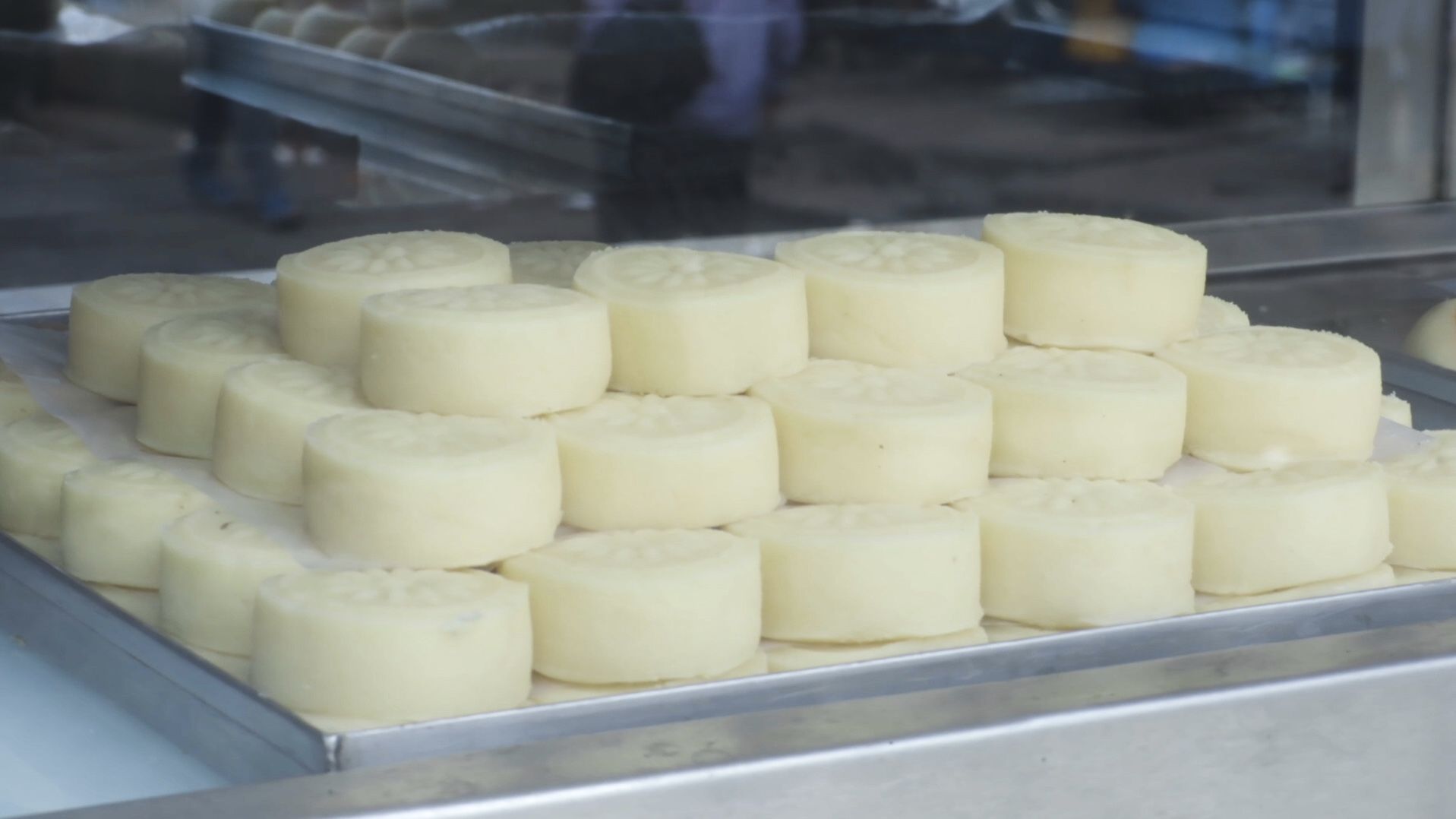
The scent of sugar wafts through the tiny space behind the bakery counter. It’s a sweet relief compared to the pungent notes of raw meat a few streets away.
On the corner of Jummah Masjid Road and Meenakshi Kovil Street is the R.S. & Sons Bakery and Sweets shop that has been hand-making pastries and confectionery for nearly 62 years.
Located just beyond the bustle of Russell Market, the bakery is run by Anees Ahmad and his father Iqbal as a family business.
“My grandfather started this business because he liked baking," Mr Ahmad tells me. "So, my dad is here and still to this day he is here. Then we – me and my big brothers are here.” We are standing together at the back of the store while customers line up on the other side of the counter sampling sweets.
Famed for its savoury pastries, the bakery, which opened in 1957, is the oldest and now among one of the last remaining bakeries along Jummah Masjid Road.
But for Mr. Ahmad, the memories of his childhood spent in the store are still fresh and he recalls a time when bakeries were prominent on the Jummah Masjid Road. In those days, he came here with his father.
“As a kid I used to come in the evening, and I used to have some chocolates as well as the pastries.” It’s the first time I see Mr. Ahmad smile. His expression is full of glee as he tells me his young son will follow in his footsteps.
“He likes it! Sometimes when I make some pastries or something, even he does the same thing I am doing. He takes the cutter and starts doing the same thing!" he chuckles.
"I have two kids, actually. Definitely, they will come and take the business.”
India ranks third in the world for having the most family-owned businesses. Mr. Ahmed says the bakery is more than just a workplace for him and his family.
“Actually, it’s like a DNA. It’s in my [DNA]. My grandfather started it, my father and now me doing the same business. Then my kids also will come.”

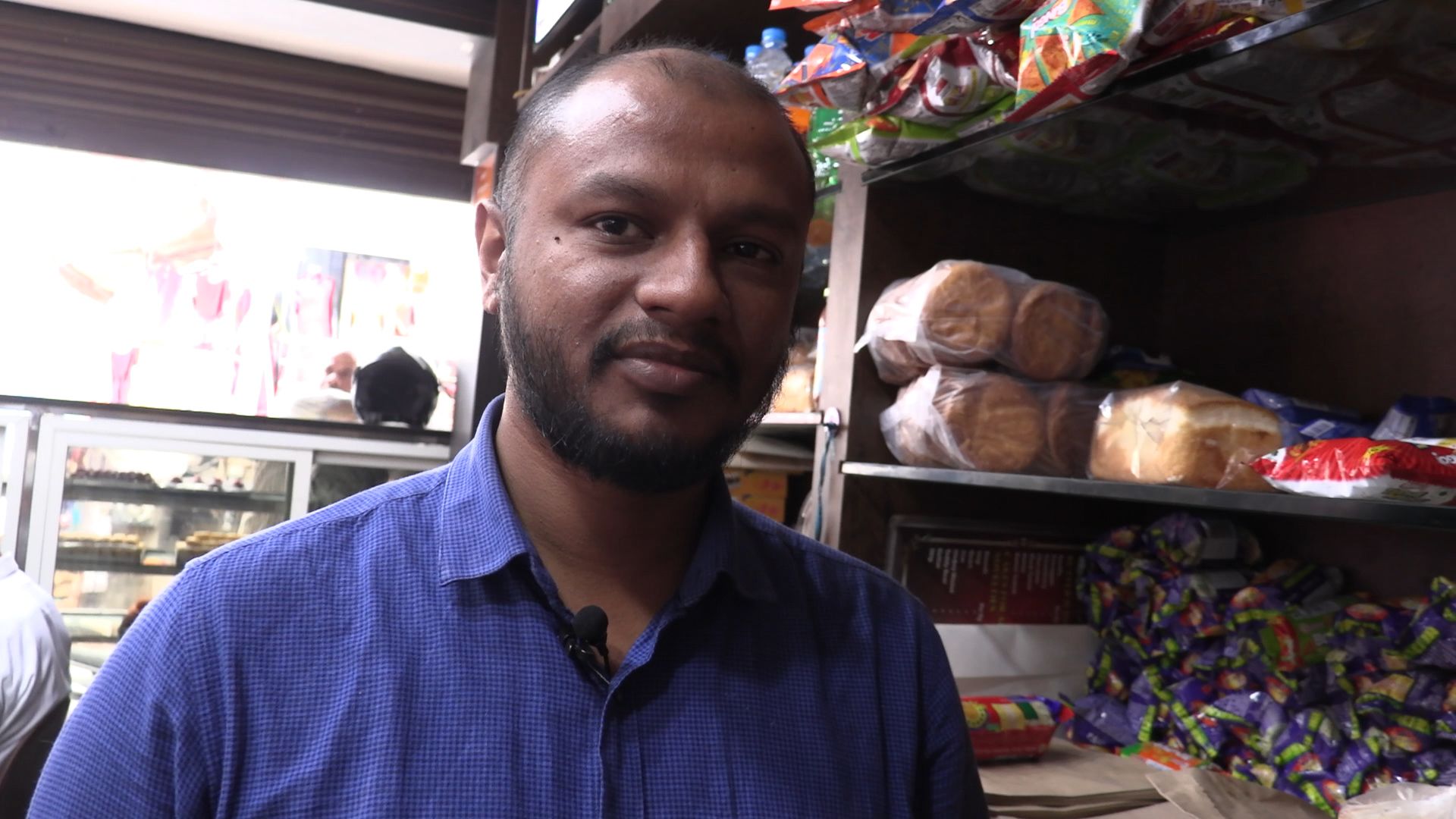

Meet the family running one of the oldest bakeries on Jummah Masjid Rd in Bangalore, India.
Meet the family running one of the oldest bakeries on Jummah Masjid Rd in Bangalore, India.
Blooming Bangalore
By Dana Rutner

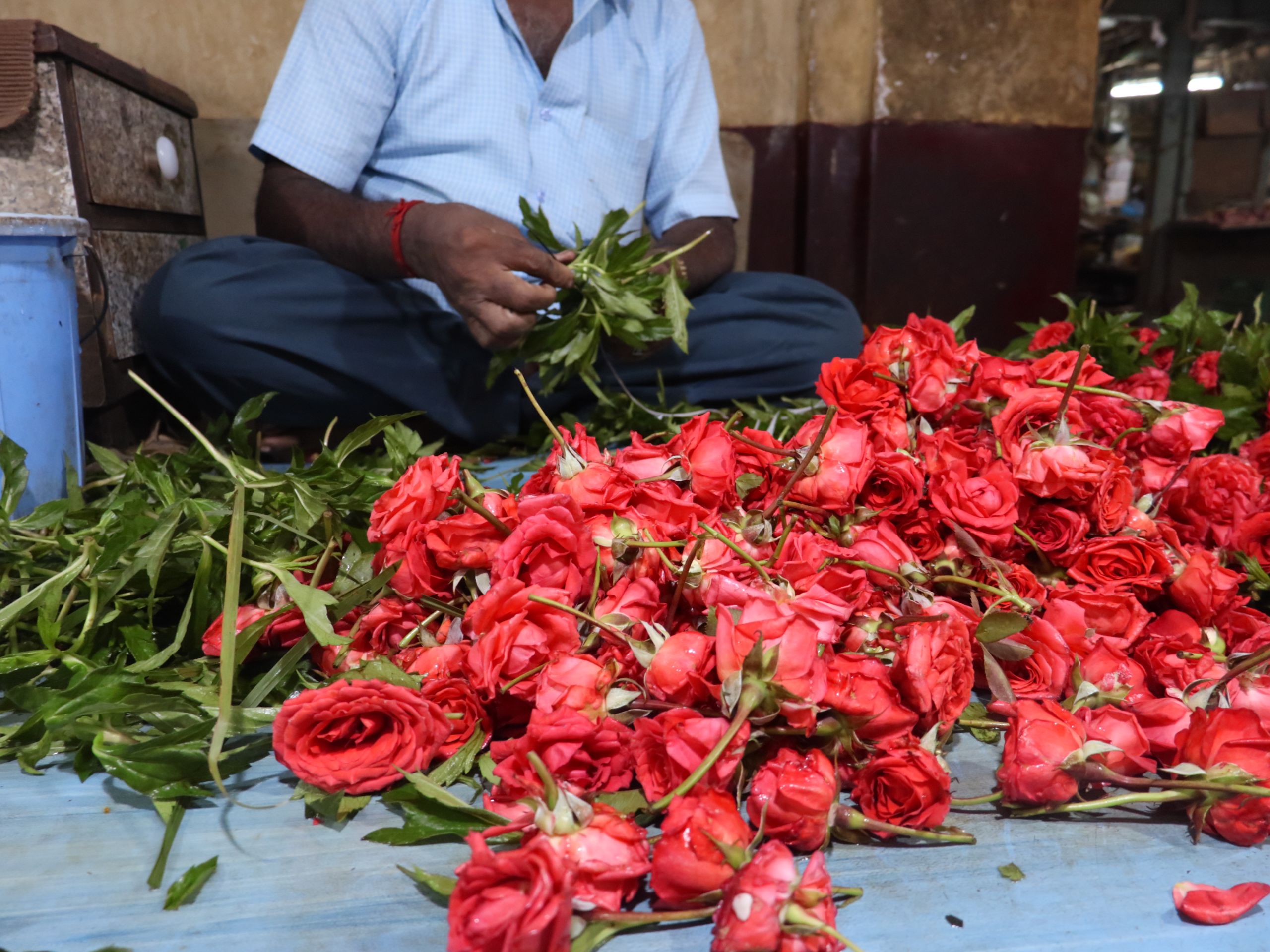
Marigolds, jasmine, roses and lilies fill the central corridor of Russell Market. Fresh flowers perfume the air, as their bright colours are juxtaposed against the concrete floors and wooden slats.
Each stall is high off the ground with men sitting cross-legged, surrounded by bunches of flowers. The men carefully place each fragile flower in the correct position to produce the perfect garland. Nafees Khan and his brother are two of the garland makers in the market. They have been working there for the last 30 years.
Garlands, or malas in Hindi, are essential to marriage ceremonies, engagements, funerals and religious festivals across India.
Mr Khan’s hands quickly work to produce a long arrangement of flowers as he speaks of the skills that have been passed onto him from his father and grandfather. Each garland is made from at least 250 flowers and can be over six metres in length.
For Mr Khan, the job is a family tradition. Mr Khan smiles, “this one is from my family, my grandfather, my father, we know all about these things.”
The intergenerational aspect of this occupation is common in this part of town. The Khan family have been operating in Russell Markets for over 100 years.
However, Mr Khan does not have the same dream for his children. “This may be the last. The next generation will not work here,” he says without a trace of regret.
Mr Khan is pleased with the new direction his family is taking. All four of his children are studying and so are his brother’s children. “We want them to have nice jobs,” he says.
Mr Khan is not the only person whose stall will end with him. Sayed Azgar also comes from a line of garland makers. His father and grandfather spent their lives making garlands in the very same market. Mr Azgar has been working in the market for 25 years but does not have any children to teach and take over the family occupation.
Each stall holder beams as they work, inviting the locals and tourists to smell the roses. As people walk past, they are mesmerised by the meticulous, mechanical movements as one flower grows in front of your eyes into a delicate garland.

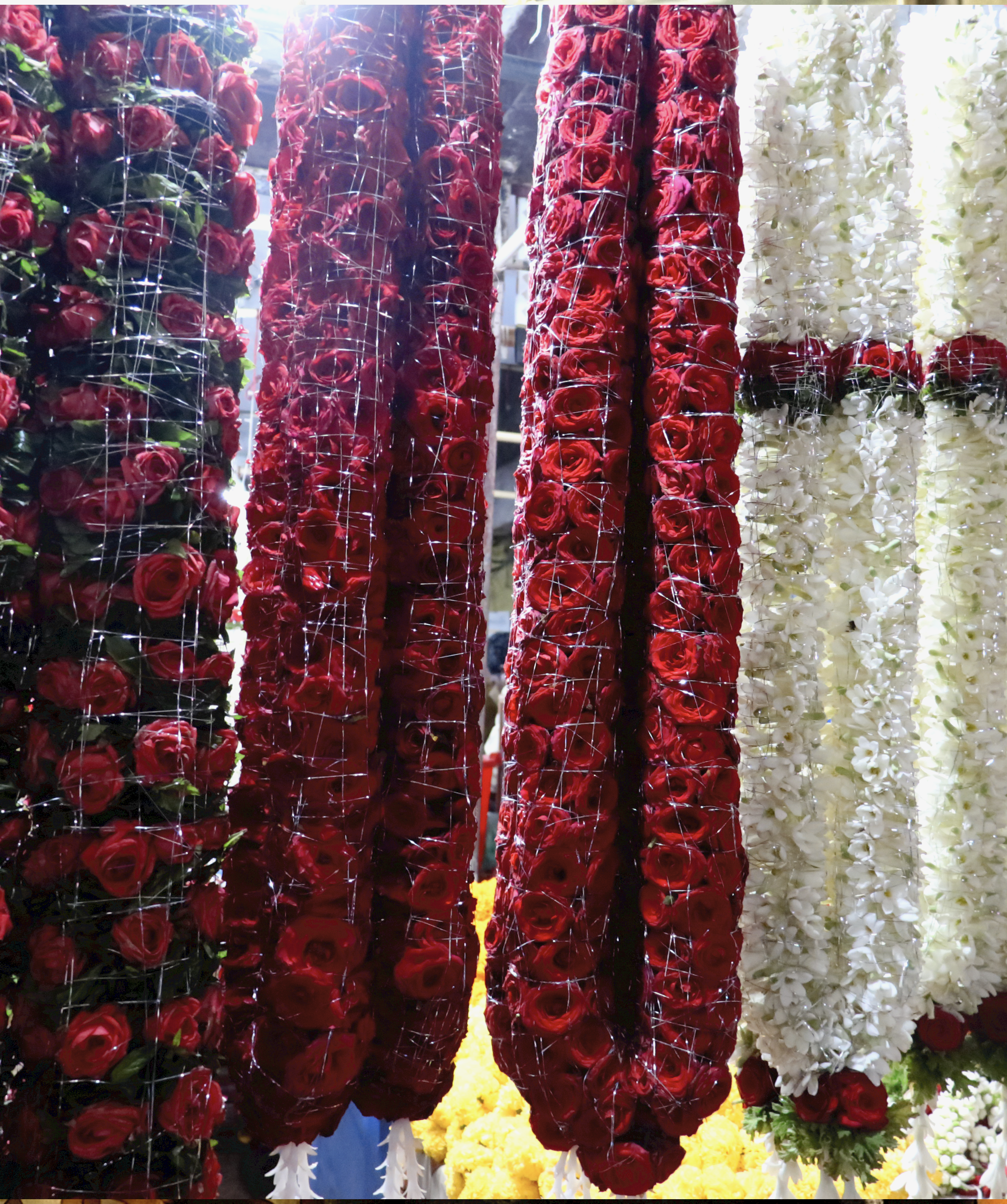

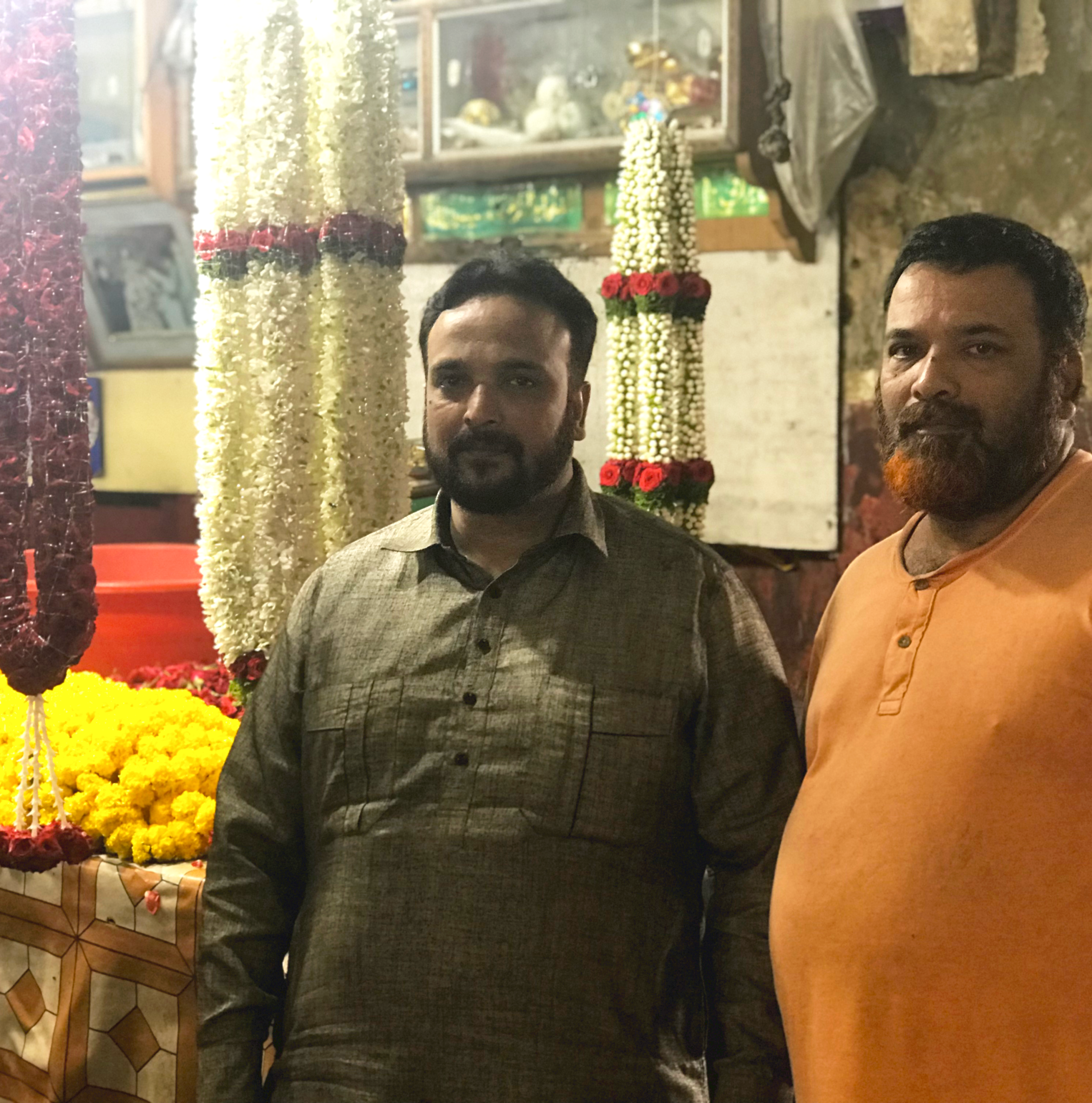

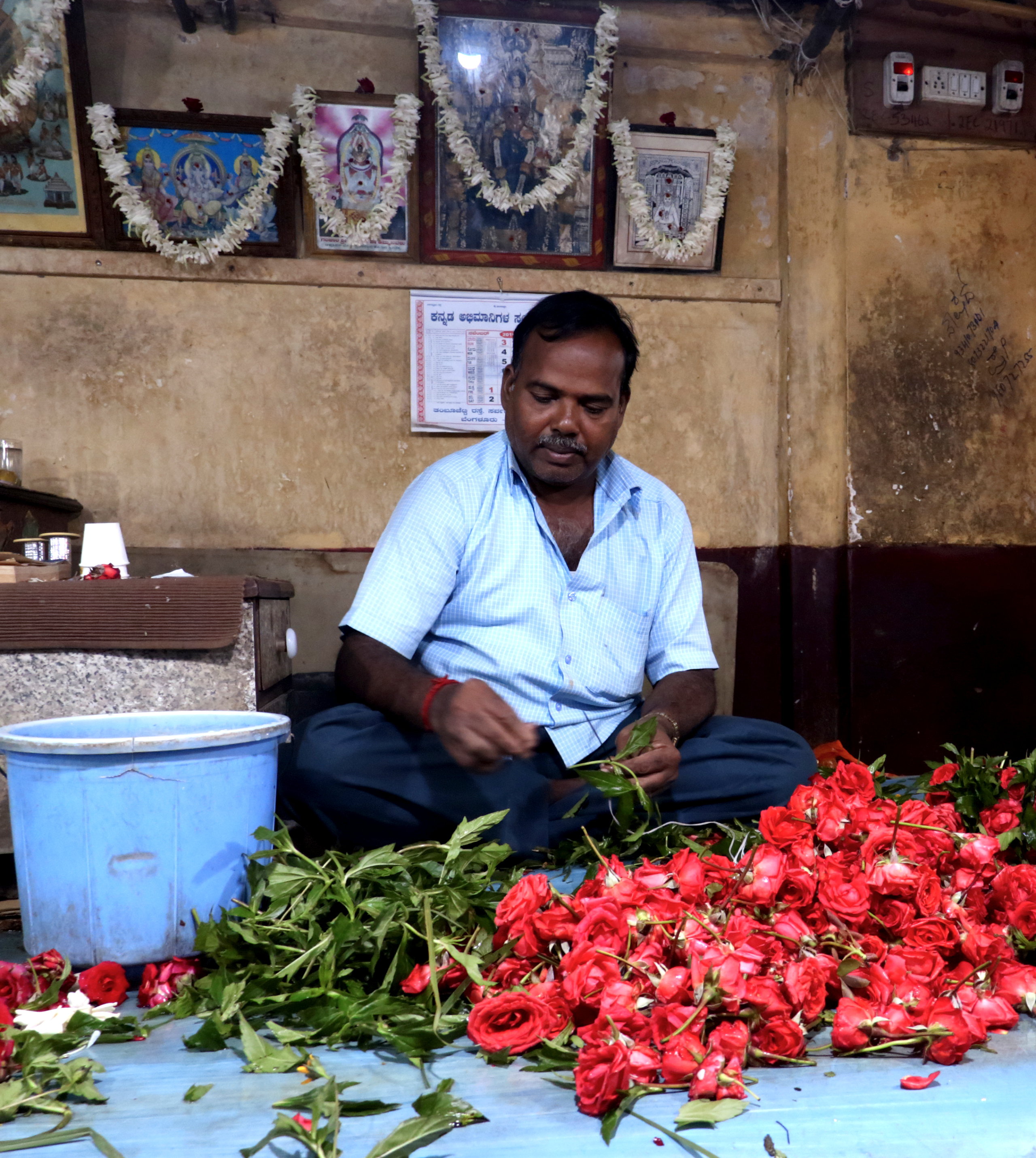
Russell Market garland workers show the skills they've learnt from their families.
Russell Market garland workers show the skills they've learnt from their families.

Writers & Photography: Dana Rutner, Sarah-Jane Adams, Adelaide Miller, Olivia Whiting and Amaani Siddek
Editors: Sarah-Jane Adams, Dana Rutner
The Foreign Correspondent Study Tour (FCST) is supported by the New Colombo Plan (NCP) mobility grants.